
NexusCon 2026 brought the connected buildings community together in Detroit, Michigan for conversations about where the industry is headed and, just as importantly, how teams can put those ideas into practice today.
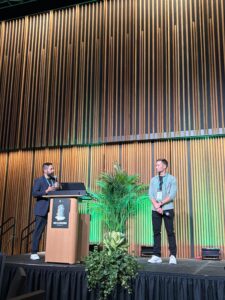
The Aptitude team was there throughout the event, sharing lessons from the field, demonstrating technology in action and connecting with others working to make buildings smarter and more useful for the people who operate them.
Here’s a look at what we shared at NexusCon 2026.
Aptitude kicked off NexusCon on the Demo Stage with a hands-on look at digital twin technology using Autodesk Tandem.
The demonstration explored VAV troubleshooting through a digital twin, showing how connected building information can support a practical, real-world use case. Rather than treating the digital twin as simply a visualization tool, the demo focused on putting data to work to help teams better understand and troubleshoot their systems.
Senior Design Manager Jacob Jackson took the stage during the. Intent, Intact session to tackle a challenge Aptitude sees across smart building projects: integration problems often being long before installation.
In “Integration Failed Before Install: Fixing Design-Phase Coordination for Smart Buildings,” Jackson explored coordination gaps that can create problems later in a project, from integration requirements that aren’t reflected in MEP drawings to unclear ownership between trades.
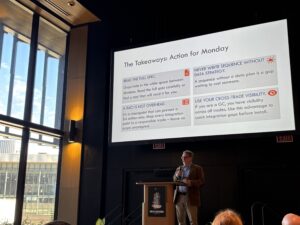
His message was straightforward: succesful integration requires earlier coordination.
By introducing integration checkpoints during design, aligning data and sequence requirements sooner and clearly defining responsibilities before construction begins, project teams can reduce risk and avoid costly surprises down the road.
Later in the conference, Operations Director Derek Seitz joined Emory Burch, Senior VDC Manager, and Jacob McDonald, Digital Delivery Engineer, for “Same Asset. One Name. Every System.”
The session looked at a deceptively simple challenge: the same building asset can carry different names across the BAS, CMMS, digital twin and other systems. When those names do not align, teams are left manually determining which records belong to the same piece of equipment.
The discussion explored how establishing a consistent asset identity earlier in the construction process can create a stronger foudnation for operations.
For owners, the lesson is an important one. Asset information shouldn’t have to be cleaned up at the end of a project. By identifying assets early, establishing a naming structure that works accross systems and maintaining it through commissioning, project teams can help create information operators can trust and use from day one.
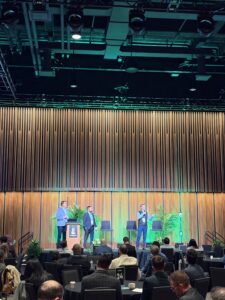
Although the Aptitude team approached NexusCon from several different angles, a common idea connected each conversation: smart building outcomes depend on decisions made well before technology is installed.
Whether the focus was trobuleshooting through a digital twin, coordinating integration requirements during design or creating consistent asset identities, the conversations in Detroit reinforced the importance of planning for how building systems and information will work together throughout the building lifecycle.
Beyond the presentations and demos, NexusCon offered an opportunity to connect with others across the connected buildings community and exchange ideas about the challenges facing owners, designers, contractors, and technology teams.
Thanks to everyone who attended a session, stopped by the Demo Stage or connected with the Aptitude team throughout the conference! We thoroughly enjoyed being a part of the conversation in Detroit and sharing a few of the lessons we’re learning in the field.