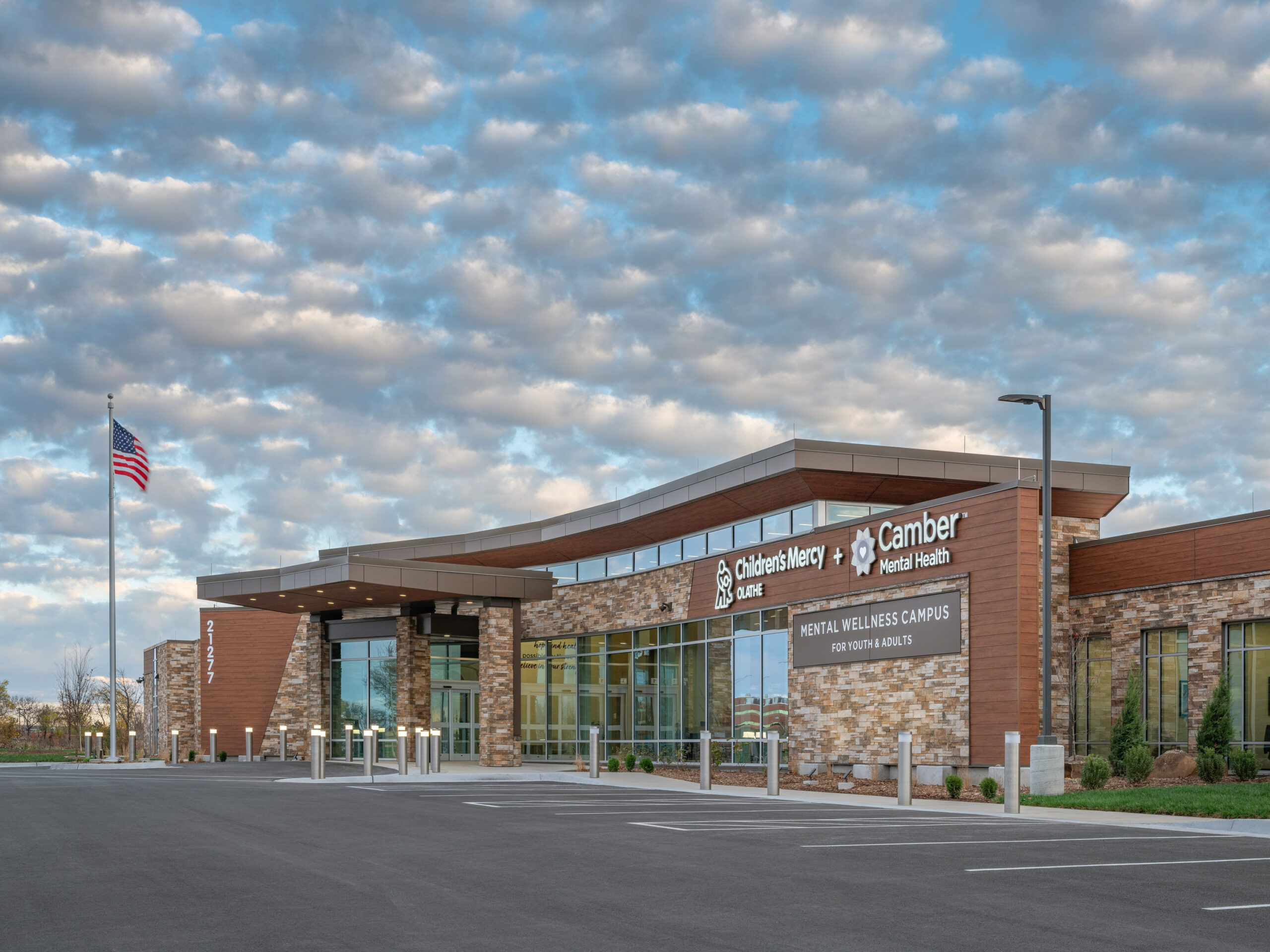
The Children’s Mercy + Camber Mental Health Mental Wellness Campus in Olathe, Kansas, was built to address an urgent community need for accessible, trauma-informed behavioral health care.
 More than 4,000 children and teens visited Children’s Mercy’s emergency room for behavioral health challenges in the year prior to opening; one in five required inpatient care that was difficult to find. The 58,438-square-foot, 72-bed psychiatric hospital provides both youth and adult inpatient services within a single state-of-the-art facility.
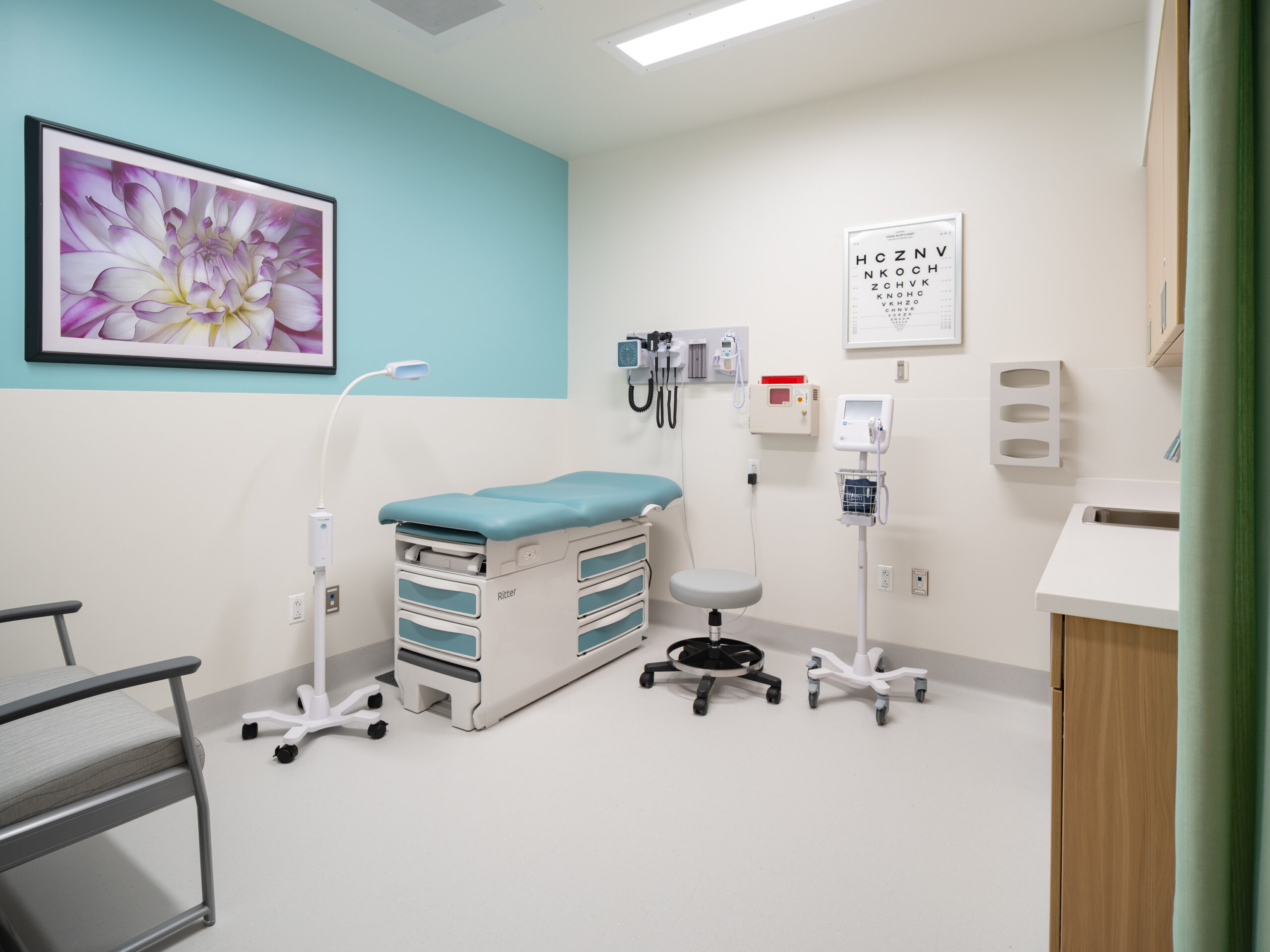
By integrating two care environments, 24 private adult rooms and 48 private youth rooms, the CMC hospital ensures patient safety, privacy, and programming tailored to each population.
“The technology we leverage helps increase safety for both our patients and our employees,” said Sara Schlagel, Senior Vice President, Children’s Mercy + Camber Mental Health. “While it doesn’t replace the work a person would do, it complements it in a way that provides an essential added layer of protection.”
While Aptitude delivered a full suite of low-voltage systems—including AV, structured cabling, access control, video surveillance, paging, and emergency responder radio—the team’s most meaningful contribution extended beyond any single system.

Aptitude served as a neutral intermediary and advocate, working closely with KVC, JE Dunn, and design partners to align technology decisions with real-world needs. KVC had identified a critical operational need: a smarter, more responsive way to monitor patient activity.
Aptitude helped guide the selection of an AI-enabled monitoring system that leveraged the facility’s existing camera network. The system was designed to help staff quickly identify and respond to safety concerns, including potential fights, falls, or overcrowding in patient areas.
“The goal wasn’t to just pick a piece of technology,” said Peggy Olivarez, Project Manager, Aptitude. “It was to really understand what the client needed operationally and make sure we were solving the right problem.”
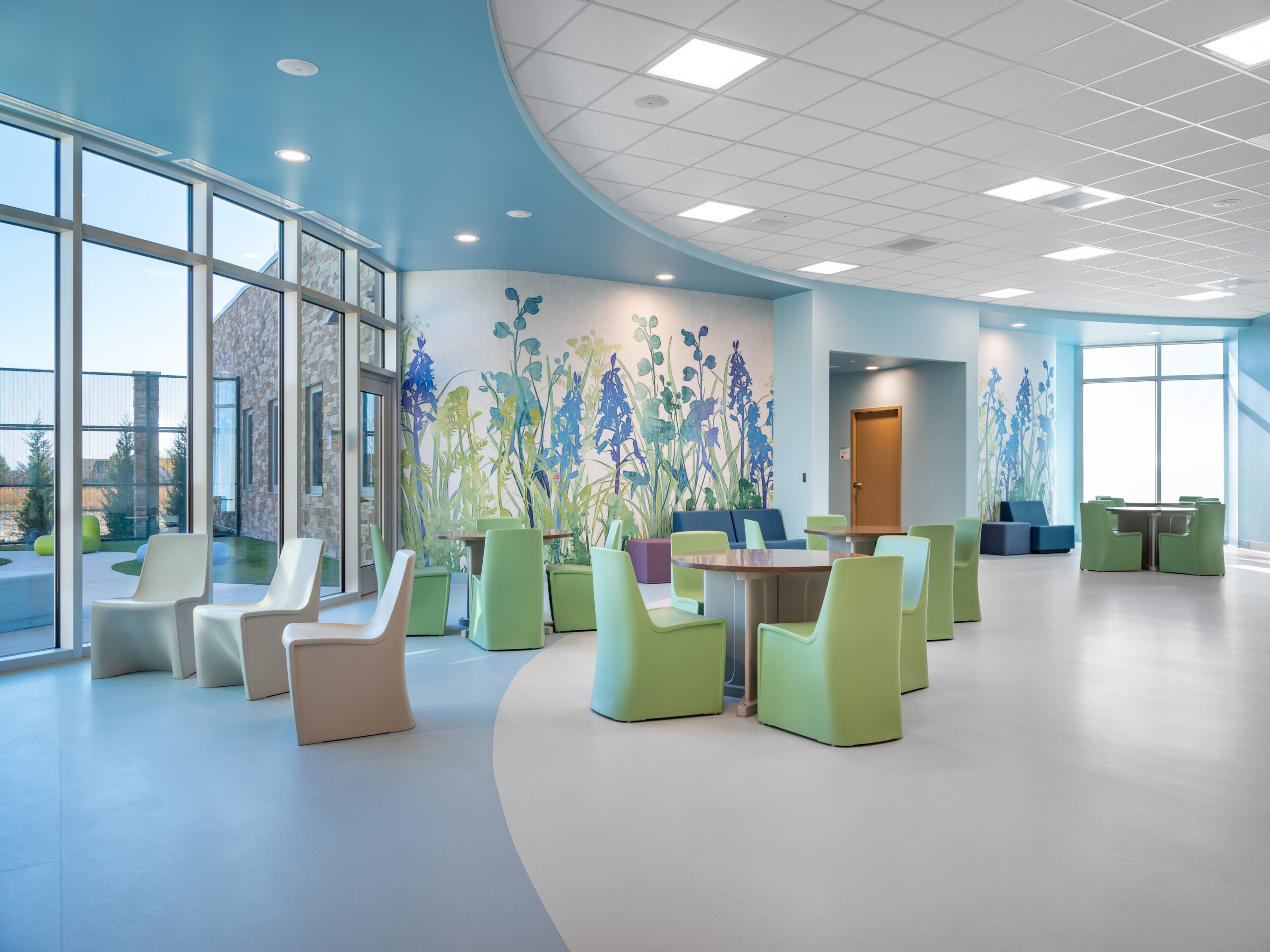
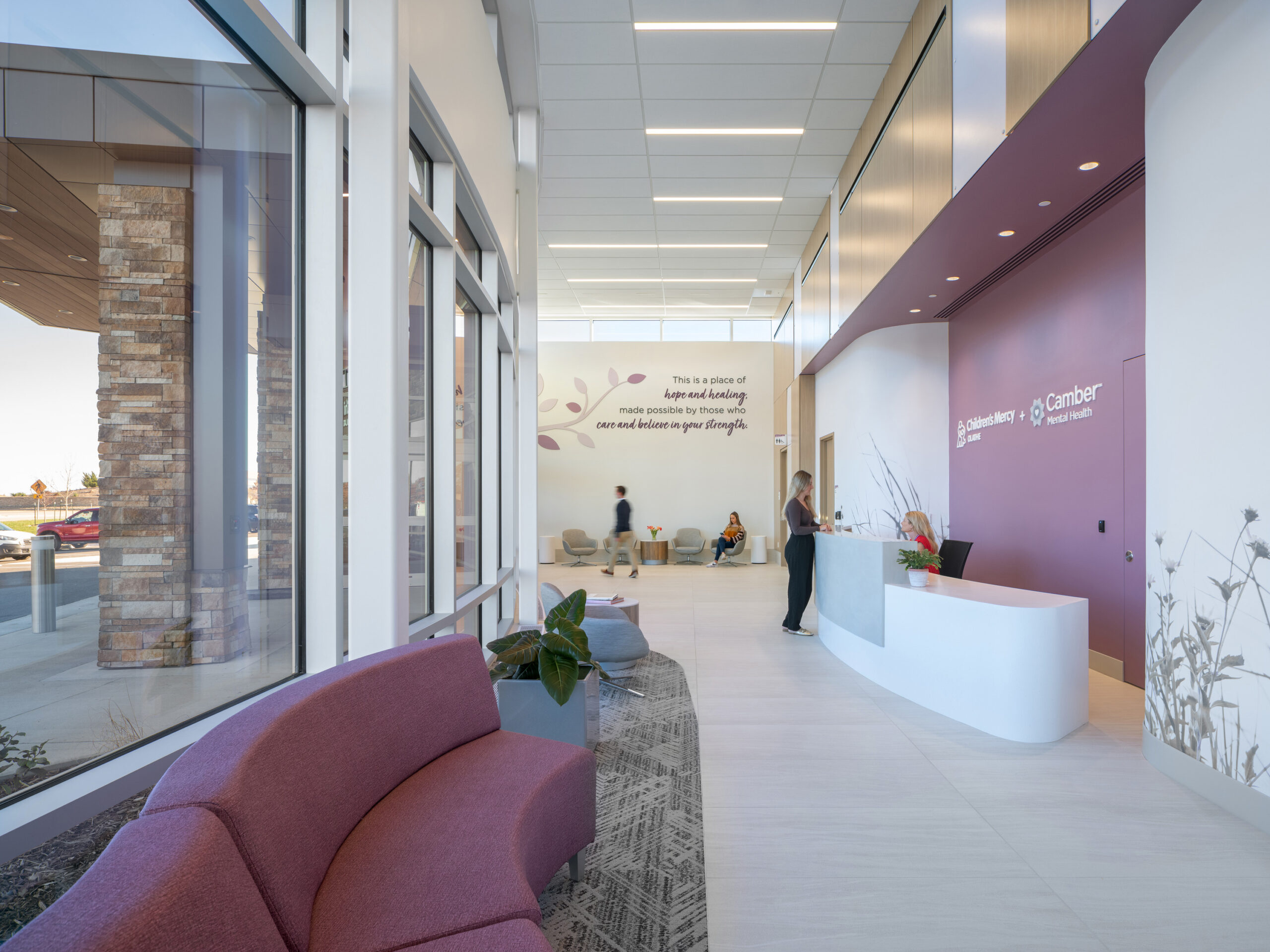
A goal of the facility was to create a therapeutic environment that defies the stigma often associated with mental health facilities. Through a collaborative design-build approach, Aptitude’s work incorporated a range of safety-focused adaptations to minimize risk.

“KVC and Camber want to leverage technology to improve patient care and safety at our facilities,” says Erik Nyberg, Executive Vice President of Technology at KVC Health Systems. “Aptitude has been a great partner in identifying sustainable solutions—from tracking patients through our hospital to enhancing therapy environments and supporting flexible, calming spaces.”
The Children’s Mercy + Camber Mental Health Campus demonstrates that when technology is implemented with the same intention applied to architecture, it stops being infrastructure and becomes an active part of the healing environment.
“This is our whole job — to care about these systems and how they impact the end user,” said Olivarez. “When you take the time to understand that, you deliver something completely different.”