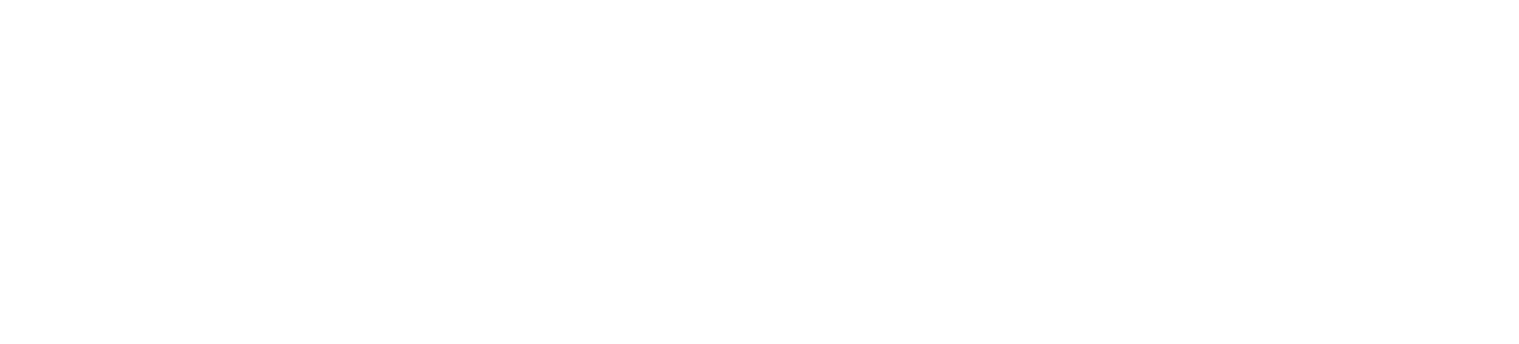
From an early age, Theresa Johnson sensed that her future would unfold outside the limitations of a traditional career path.
“I always knew I was supposed to do something meaningful — I just didn’t know exactly what it would be yet,” she said. “That sense of purpose is what kept me moving forward, especially in such a male-dominated industry.”
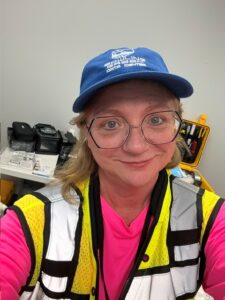
Johnson, who currently serves as Aptitude’s Fiber & Infrastructure Training Specialist, has been involved in the limited energy field since before Category 5 cable was introduced. One of her first jobs in the industry involved work on prototype wiring harnesses for Boeing while they were developing the 777. This role gave Johnson the opportunity to learn fiber optics very early on and built the foundation for her career today.
She then joined the International Brotherhood of Electrical Workers (IBEW) in 1997, around the time the group was starting the limited energy and low-voltage side of the union. Looking back, she attributes much of her early momentum to a strong mentorship—an influence that led to valuable training, work on major projects, and leadership opportunities.
In 2008, she had the opportunity to teach at the IBEW Apprentice Training Center in Cleveland, OH. She continued to teach for the next 10 years. Eventually, Johnson became a national instructor for the IBEW Training Institute, instructing others how to teach structured cabling and fiber optics.
While juggling a full-time job and teaching at night, Johnson was also raising three kids and managing a farm.
“It was definitely a busy season of life,” she laughed.
But in an industry defined by speed, scale, and constant change, the margin for error is small and the cost of getting it wrong is high. But for Johnson, the answer isn’t complexity. It’s clarity.
As Johnson prepares to lead a new training program that will offer a curriculum for staff members who are beginning their careers as fiber technicians, she reflected on her journey and lessons along the way that continue to guide how she trains and leads.
I help get teams ready for hyperscale data center work, focusing on training, quality, and smooth execution. Day to day, I’m building and teaching content, syncing with field leaders, and turning standards into practical steps crews can actually use. A lot of it is listening, coaching, and helping people solve real problems in the field.
I got into this work because I like systems that perform under pressure, and I like helping people succeed inside them. Training is where quality, safety, and pride in the craft all meet. What keeps me passionate is seeing crews gain confidence, tighten their work, and know they can deliver repeatable, high-quality results on complex projects.
People are surprised how much of this job is communication and choreography. The tech matters, but aligning trades, schedules, and standards is what makes the technology work.
In this field, we also need to retain information long-term. We need to be able to recall procedures, troubleshoot problems and apply knowledge months or years later. Real learning requires interaction. You have to hear it, write it down, engage with it and revisit it. That’s how information sticks.
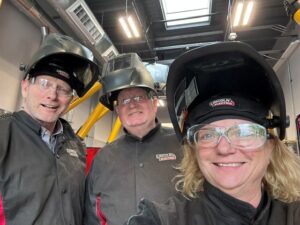
Because process and procedure matter from the very beginning. In hyperscale data centers, small mistakes repeated over and over can create massive rework issues later. Training creates consistency, accountability and safety.
You can’t effectively teach this industry without firsthand experience. So much of what I teach comes from real situations I’ve lived through — successes, mistakes, challenges and lessons learned. No matter how experienced you are, you can always learn something new.
Common gaps are fuzzy ownership, uneven workmanship, weak documentation, and late discovery of problems that should have been caught at the start. You also see more rework, schedule churn, and avoidable safety and quality issues.
One moment that stands out was when a trainee applied a standard to fix a recurring issue. They realized that documentation prevented reworks, and they shared it with the crew. After that, the team’s work was cleaner, faster, and easier to inspect.
Always stay curious.
I carry a notebook everywhere and write things down constantly. If something catches my attention, I make a note to learn more about it later. The worst thing you can do is stop learning. Keep your mind active. Read, ask questions, stay engaged and stay curious.
I’m a huge reader, especially true crime. I also love being outdoors and anywhere near warm weather and water. The beach is definitely my happy place.